Solitaire Ocean
Solitaire Card Games ClassicCard
4.94.38K Reviews
- Version
- 6.5.2
- Installs
- 5.00M
- Age Rating
- Everyone
Screenshots


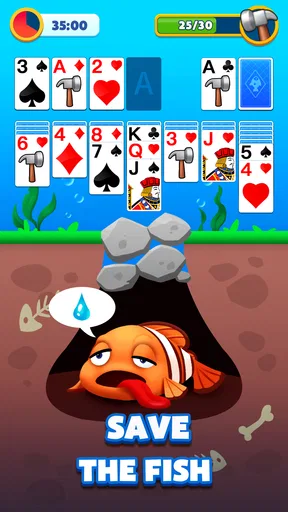
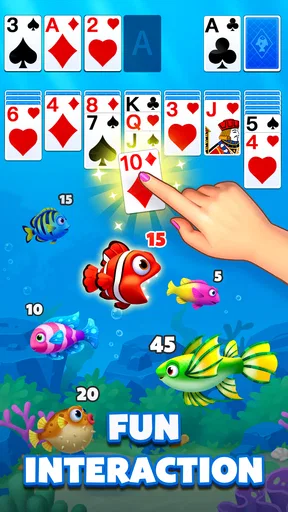
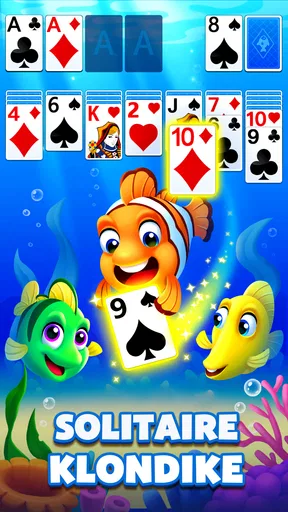
Our Review of Solitaire Ocean
 Analysis by Appyee
I usually turn to solitaire when I want something quiet, familiar, and easy to pause, but Solitaire Ocean adds a second reason to keep playing: each card session is tied to a dreamy aquarium-building theme. That combination gives the classic card format a little more purpose than simply clearing one deal after another. I can play for a few minutes, return later, and still feel that the session fits into a larger visual project.
Developed by Solitaire Card Games Classic, this free card game is aimed at Everyone and works on Android devices using version 6.0 or later. It has attracted more than five million installs, with a 4.9 average from roughly 75 thousand ratings and about 4.4 thousand written reviews. Those numbers suggest that the straightforward formula has found a large audience, but they do not replace hands-on judgment. The important question is whether the aquarium layer genuinely improves solitaire or merely decorates it.
How the first sessions establish a reason to continue
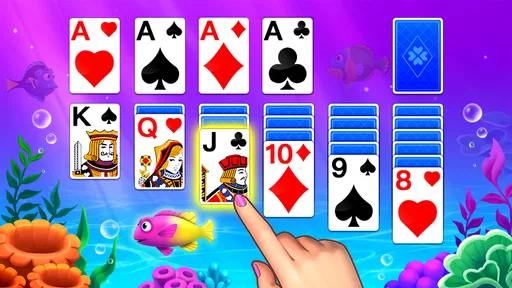
The opening appeal is immediate because the card rules are familiar. I do not need to learn a complicated board, memorize special abilities, or understand a long story before starting. The aquarium setting gives the game its identity, while the solitaire play provides the dependable rhythm: inspect the layout, uncover useful cards, make a sequence, and decide whether to spend a move now or preserve a better option for later.
That simplicity is especially useful in everyday situations. I can imagine opening it while waiting for an appointment, during a short commute as a passenger, or at the end of the day when I want a game that does not demand constant concentration. A round can be treated as a complete little task rather than a commitment to a lengthy campaign. The offline focus is also practical for moments when I want to play without relying on a connection.
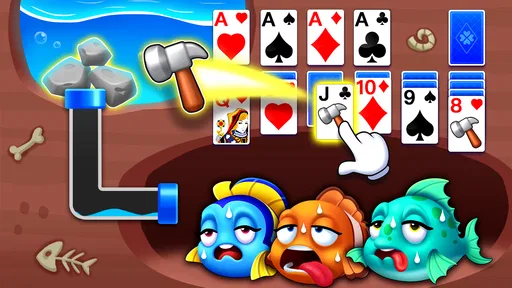
The aquarium theme gives early play a visible goal beyond the cards themselves. Instead of seeing every deal as an isolated puzzle, I have a reason to connect successful sessions with the gradual design of an underwater space. That visual context makes small progress feel more tangible. It is a clever fit for solitaire because the card game is already built around repeated, focused actions, while the aquarium supplies a softer sense of accumulation.
Still, I would not recommend it to someone looking for a deep strategy game from the first minute. The early experience is intentionally approachable. Players who want complex deck construction, competitive matches, elaborate characters, or a strong narrative may find the basic solitaire foundation too restrained. This is best understood as a relaxing card game with a decorative progression layer, not as a full aquarium simulation or a role-playing adventure.
What the aquarium layer adds to ordinary solitaire
The strongest design choice is the contrast between concentration and calm. Card placement asks me to think in short bursts, while the underwater presentation gives the surrounding experience a slower, more relaxed mood. That balance helps prevent the game from feeling like a bare card utility. I am not only chasing a win; I am also returning to see the space develop.
One useful way to approach it is to treat the aquarium as a pacing tool. If I focus only on completing deal after deal, repetition can become noticeable. If I use the visual design as a reward for steady play, the same card structure feels less mechanical. This is a subtle distinction, but it matters over several sessions. The game works best when I accept its gentle loop instead of expecting every round to introduce a new rule.
The theme also makes it more suitable for casual players who might find a traditional solitaire app visually plain. Someone who already enjoys arranging cards may appreciate the extra atmosphere, while a newcomer receives a clearer sense of why another round might be worth starting. The aquarium does not need to transform the rules to be useful; it only needs to give repeated play a more inviting frame, and in my experience it does that.
Progress signals, unlocks, and the feeling of moving forward
The progression is most convincing when it stays connected to what I am already doing. I play solitaire, complete the immediate objective, and then see that effort reflected in the aquarium theme. This is a better fit than forcing a separate management system between card rounds. The game’s appeal comes from keeping the loop understandable: play, make progress, improve the setting, and return when I want another quiet challenge.
That structure creates an important early goal. I am not required to invent a personal reason to continue because the aquarium provides one. At the same time, the goal is light enough that it does not turn a relaxing game into a checklist. For me, this makes the title more approachable than a version of solitaire that relies entirely on statistics, streaks, or completion screens.
A practical tip is to play with a small personal target rather than trying to rush through everything. I might decide to complete one session during a break, then stop once it is done. This keeps the aquarium progression feeling rewarding instead of turning it into pressure. Players who enjoy longer sessions can continue, but the game also suits people who prefer brief bursts because the basic activity remains understandable even after an interruption.
The free entry point is another part of the progression equation. I can try the central experience without paying, which makes it easier to judge whether the aquarium theme holds my attention. There are in-app purchases ranging from $0.99 to $79.99 per item, so anyone sensitive to optional spending should decide in advance how strictly they want to keep the game free. I would personally begin without buying anything and see whether the normal play loop provides enough satisfaction.
That recommendation is not a criticism of the purchase model by itself. It is simply the sensible approach for a game built around repeated sessions and gradual visual progress. If I feel that I need to spend to make the experience enjoyable, the underlying card play may not be a good match for me. If the free loop already feels pleasant, optional purchases can remain exactly that: optional rather than a condition for discovering whether the game belongs on my phone.
How to read the game’s progress without rushing it
The most useful progress signal is not a single dramatic milestone but the sense that ordinary card play is contributing to a changing environment. I find that more satisfying than a bare win counter because it gives successful rounds a visible destination. The trade-off is that players who need frequent new mechanics may eventually see the progression as too gentle.
This is also where expectations matter. The aquarium theme can make a familiar format feel fresh, but it cannot remove the repetition built into solitaire. I would recommend it to someone who enjoys routine with a pleasant visual reward. I would skip it in favor of a more competitive card game if my main motivation were rankings, direct opponents, or constantly changing tactical rules.
Another small but important habit is to avoid treating every deal as something that must be solved at any cost. Solitaire is more enjoyable here when I accept that some sessions are simply short attempts. That mindset reduces frustration and lets the aquarium progression work as a gentle incentive rather than a demand. The game is strongest when progress feels like a by-product of relaxing play.
Difficulty, pacing, and the point where repetition appears
The difficulty curve benefits from the familiarity of classic solitaire. I can understand the immediate objective, evaluate available moves, and gradually improve my decisions through repetition. The challenge is not presented as an intimidating wall. Instead, it comes from recognizing when a tempting move may block a more useful sequence, when to uncover a hidden card, and how to manage the limited space on the board.
That kind of challenge is ideal for players who want mental activity without a heavy rules burden. It rewards attention, but it does not require me to study a large collection of cards or abilities. I can become more efficient simply by noticing patterns and resisting impulsive moves. The result is a comfortable difficulty curve for casual play, particularly when I want something more engaging than passive scrolling.
The limitation is that familiar solitaire can become predictable for experienced players. Once the basic decision-making feels automatic, the aquarium becomes increasingly important as a reason to continue. Newcomers may enjoy learning the rhythm, while longtime solitaire users should ask themselves whether the visual progression is enough to refresh a format they already know well.
I also think the pacing works best in short sessions. The game’s calm presentation encourages me to settle in, but several rounds in a row can expose the repeated structure. My practical approach would be to alternate it with other activities rather than treating it as an all-day game. That preserves the relaxing quality and prevents the card loop from becoming background noise.
For a realistic example, I might open it after dinner when I want to unwind but do not want a demanding action game. I can play one round while listening to something else, stop after a win, and return the next evening. In that situation, the aquarium theme gives continuity without requiring me to remember a complicated plot. If I instead want a game that rewards intense concentration for an hour, a more strategic card title would probably suit me better.
Where the challenge feels fair and where it may feel limited
The fair part of the design is its clarity. The card objective remains the center of attention, so I am not spending energy learning an unrelated progression system. The trade-off is that the game’s long-term challenge depends heavily on my personal tolerance for repetition. Players who enjoy improving their own decisions can stay engaged longer than players who need fresh content every few minutes.
I would also be cautious about confusing visual progress with increasing difficulty. The aquarium gives the experience a sense of movement, but the fundamental card task remains the main source of challenge. That is not a flaw; it is simply the nature of the game. The title succeeds by making solitaire more inviting, not by turning it into a radically different genre.
Retention pressure and the importance of playing on your terms
Every repeatable mobile game has to balance encouragement with pressure. Here, the aquarium theme naturally encourages another round because I want to see the environment develop. That is a pleasant form of retention when I remain in control of the pace. It becomes less appealing if I start playing only because I feel obligated to maintain progress.
The free price makes experimentation easy, but the range of optional purchase prices means I would pay attention to my own habits. A good rule is to decide before playing whether I am comfortable spending and then stick to that decision. This is particularly useful for a relaxing game, because the whole point is to reduce friction, not create a new source of financial or time pressure.
I appreciate that the game can fit around interruptions. Solitaire is naturally pause-friendly, and the aquarium theme does not require me to stay in a live match or coordinate with another player. That makes it a better choice than competitive alternatives for quiet breaks, travel without dependable connectivity, or evenings when I want to play at my own speed.
On the other hand, that same independence means there is less social urgency. If I enjoy sharing results, facing human opponents, or participating in a constantly changing community, this will feel solitary in the literal sense. The game’s strength is personal pacing, not social competition. Knowing that distinction before installing it will prevent disappointment.
The age rating of Everyone also matches the approachable tone I would expect from a classic card game with aquarium decoration. It is a comfortable option for a broad audience, although adults who want mature storytelling or sophisticated strategy should look elsewhere. The accessible presentation is part of the appeal, but it also places a natural ceiling on complexity.
Who should install it and who should pass
I would recommend it to someone who likes classic solitaire, wants a more attractive setting than a plain card table, and values offline-friendly casual play. It is also a good fit for people who enjoy visible, gradual goals but do not want to manage a complicated economy or learn a large set of special rules. The combination of familiar cards and aquarium design makes it easy to sample without a long tutorial commitment.
I would be less enthusiastic for a player seeking competitive matchmaking, advanced deck strategy, a substantial story, or a constantly changing challenge structure. I would also pass if I knew that optional purchases or repeated progression loops tend to make me play longer than intended. In that case, a minimalist solitaire app with fewer decorative incentives might be healthier and more satisfying.
Compared with a traditional solitaire alternative, this game offers more atmosphere and a clearer reason to return. Compared with a dedicated aquarium game, it offers much less environmental management and puts the cards first. That middle position is exactly why it works for me: it adds personality without abandoning the familiar activity. It is not the deepest option in either category, but it does not need to be if the blend matches my mood.
My verdict on the long-term progression
After looking at the goals, progress signals, difficulty, and pacing together, I see Solitaire Ocean as a polished casual choice for players who want solitaire with a softer sense of direction. The aquarium theme gives repeated deals a visual destination, while the card rules keep every session easy to understand. The best experience comes from treating the game as a calm routine rather than a demanding campaign.
Its biggest strength is the balance between immediate familiarity and gradual visual motivation. I can begin playing without preparation, use it in small pockets of time, and return later without needing to reconstruct a complicated system. The most important trade-off is equally clear: the more solitaire I have already played, the more I will depend on the aquarium progression to maintain interest.
The current version is 6.5.2, and the game is free to try on compatible Android devices. I would start with a strict no-purchase approach, play several short sessions, and ask whether the card decisions themselves remain enjoyable. If the answer is yes, the aquarium layer is a welcome bonus. If the answer is no, spending more will not solve the central mismatch.
My final recommendation is positive but specific: choose it when you want a familiar card game wrapped in a dreamy underwater setting, with progress that feels gentle rather than competitive. Skip it when you need deep strategy, social play, or constant novelty. For the right player, the aquarium is not just decoration; it is the small goal that makes another solitaire round feel worthwhile.
Verdict
Strengths of Solitaire Ocean
- Relaxing solitaire gameplay with an ocean-inspired visual theme.
- Simple controls make it easy to play with one hand.
- Short rounds are suitable for quick breaks or casual sessions.
- Progression and rewards add motivation beyond individual card games.
- Colorful graphics and sound effects create a pleasant atmosphere.
Limitations of Solitaire Ocean
- Some levels may depend heavily on luck rather than strategy.
- Hints and extra moves may be limited without watching ads or spending currency.
- Repeated layouts and objectives can make longer sessions feel predictable.
- The ocean theme may appeal less to players seeking a traditional card design.
- Background animations and effects may consume additional battery on older devices.
Similar Picks in This Category
View All
Solitaire - Classic Card Games
MobilityWare4.6

UNO!™
Mattel163 Limited4.3

Spider Solitaire: Card Games
MobilityWare4.6

Solitaire.com - Classic Cards
Tripledot Studios Limited4.7

Plants vs. Zombies™ Heroes
ELECTRONIC ARTS4.1

Hearthstone
Blizzard Entertainment, Inc.4.1
Frequently Asked Questions
What is Solitaire Ocean?
Solitaire Ocean is a relaxing mobile card game that combines classic solitaire gameplay with an underwater-themed setting. Players generally complete familiar solitaire layouts while progressing through ocean-inspired backgrounds, decorations, or rewards. The app is designed for casual sessions, making it suitable for people who want a simple puzzle experience that can be played for a few minutes at a time or enjoyed during longer breaks.
How do you play Solitaire Ocean?
The main gameplay follows the familiar rules of solitaire, usually requiring you to arrange cards in sequence and clear the tableau according to the selected game mode. Tap or drag cards to move them, reveal hidden cards, and build the required stacks. New players should find the controls easy to understand, although some levels may require careful planning rather than relying only on obvious moves.
Is Solitaire Ocean free to download and play?
Solitaire Ocean can typically be downloaded without an upfront purchase, allowing users to try the basic card-game experience for free. However, free mobile games may include advertising, optional purchases, extra lives, boosters, or cosmetic content. Before downloading, it is worth checking the store listing for the current pricing details, available in-app purchases, and whether removing advertisements requires a separate payment.
Does Solitaire Ocean require an internet connection?
The core solitaire experience may be playable without a constant internet connection, which is useful when traveling or when mobile data is unavailable. Nevertheless, certain features can depend on online access, including advertisements, cloud saves, daily challenges, leaderboards, events, and purchases. Availability can vary by version and device, so it is best to test offline play after installation rather than assuming every feature works without internet.
Is Solitaire Ocean suitable for children and casual players?
Solitaire Ocean is generally easy for casual players because its card-based rules are familiar and the controls are usually based on simple taps or swipes. Its calm ocean presentation may appeal to users looking for a low-pressure game. Parents should still review the app’s age rating, advertising, privacy information, and in-app purchase settings, especially if children will use the device.
Play our best games!


